Why Her Vintage Outfits Look Effortless While Yours Look Like a Costume
Why some vintage outfits feel effortless and others feel like a Halloween assignment
There’s a very specific kind of outfit that makes people stop and think, “She just gets it.” Not because it’s loud. Not because it’s packed with references. It works because it looks lived in. The hem sits right, the fabric moves like it belongs on a real body, and nothing feels forced.
That’s where vintage style usually goes right or wrong. The issue is rarely the era itself. It’s the styling logic. One look feels like vintage style clothing worn by a person with a life. The other looks like someone raided a costume rack and decided every accessory in the room deserved a cameo.
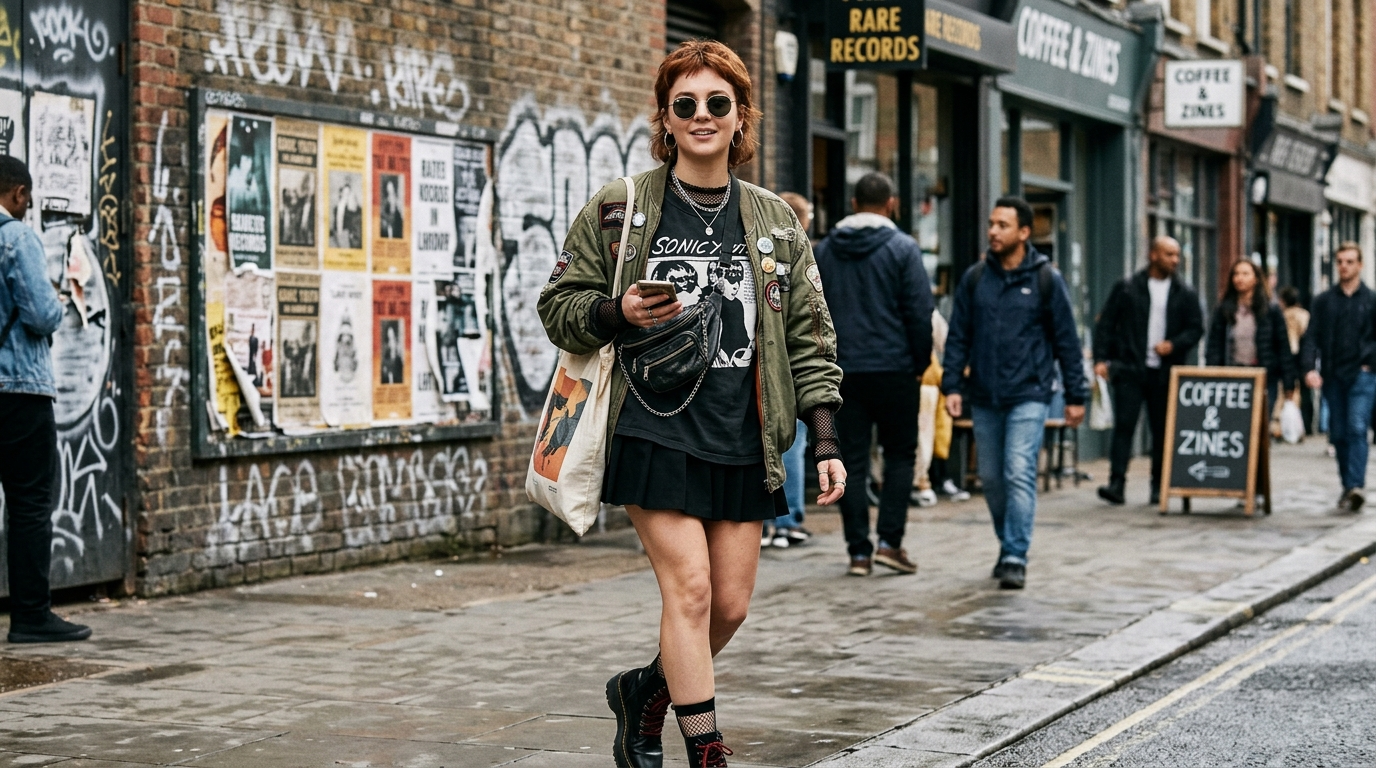
I saw this play out outside a café last fall. One woman wore a 70s-inspired midi skirt, a plain white knit, loafers, and a trench. Nothing dramatic. The skirt swayed when she walked, the knit had a little weight to it, and the whole outfit looked like something she’d worn before. Ten minutes later, another person passed in a puff-sleeve blouse, lace gloves, a beret, chunky earrings, and a handbag that seemed to belong to a different century. Each piece was fine on its own. Together, it read like a theme party.
That’s why some vintage-inspired outfits feel believable and others don’t. The eye is not asking, “Is this historically accurate?” It’s asking, “Does this person look like they dressed themselves this morning?”
The difference is not vintage. It’s visual hierarchy.
A good outfit has one clear lead actor. Everything else supports it.
A costume has five lead actors fighting for screen time.
That’s the easiest way I know to explain how to wear vintage style without tipping into theater. If the dress is doing the most, let the shoes calm down. If the blouse has a strong collar and nostalgic buttons, keep the skirt or trousers clean. If the bag is already retro, you do not need the hat, the brooch, the dramatic sunglasses, and the Mary Janes all at once.
This is where a lot of people get trapped. They think more references equals better taste. It usually does the opposite. Real style has editing. Costume has enthusiasm without restraint.
There’s also a psychology piece here. People read outfits through familiarity. A look feels credible when the brain can map it onto something it has seen in real life: a woman on the subway, someone at a gallery opening, a coworker who always looks sharp without looking styled. When every detail screams “period piece,” the brain stops treating the person as a person and starts treating them as a performance.
That’s why modern anchors matter so much. A clean sneaker, a simple leather bag, a straight-leg jean, a plain tank, a sharp blazer. These pieces don’t kill the vintage mood. They give it a place to land.
What makes vintage style clothing look real in daylight
Light is brutal. Mirrors are polite; daylight is honest.
A satin blouse that looks romantic in a fitting room can turn shiny and theatrical in an elevator. A lace skirt that seemed delicate under warm store lighting can suddenly look like a dance recital costume once you step outside. A structured jacket can either sharpen the whole look or make it feel like a dress-up box, depending on how it sits on the shoulders.
The difference usually comes down to fit and fabric behavior.
If the shoulder seam is off by even a little, vintage style clothing starts to look borrowed. If the waist is too tight, the outfit loses ease. If the fabric has no movement, the whole thing gets stiff. Real vintage-inspired outfits breathe. They sit, wrinkle, swing, and recover. That movement is part of the charm.
I’ve noticed this most with skirts. A midi skirt that falls and then settles when you sit down feels human. A skirt that balloons awkwardly or rides up in the wrong places feels like it belongs on a mannequin. Same with shoes. A low heel or loafer changes the whole read of the outfit because it grounds the body. A delicate dress with the wrong shoe can go from “effortless retro” to “I’m attending a school play.”
If you like neutral styling and want the outfit to stay modern, this is where How to Style Neutral Colors Without Looking Boring becomes useful. Vintage pieces don’t need color chaos. They need contrast, texture, and one thing that feels current.
The easiest formula: one era, one modern anchor, one quiet detail
This is the part people want a shortcut for, and honestly, there is one.
Pick one era. Then keep one thing modern. Then add one small detail that hints at the reference without shouting it.
That’s it.
A 60s-style shift dress with sleek ankle boots.
A 70s blouse with straight jeans and a leather belt.
A 90s slip skirt with a crisp tee and a blazer.
A tweed jacket with relaxed trousers and clean loafers.
The outfit works because it is not trying to time-travel. It’s borrowing mood, not reenacting history.
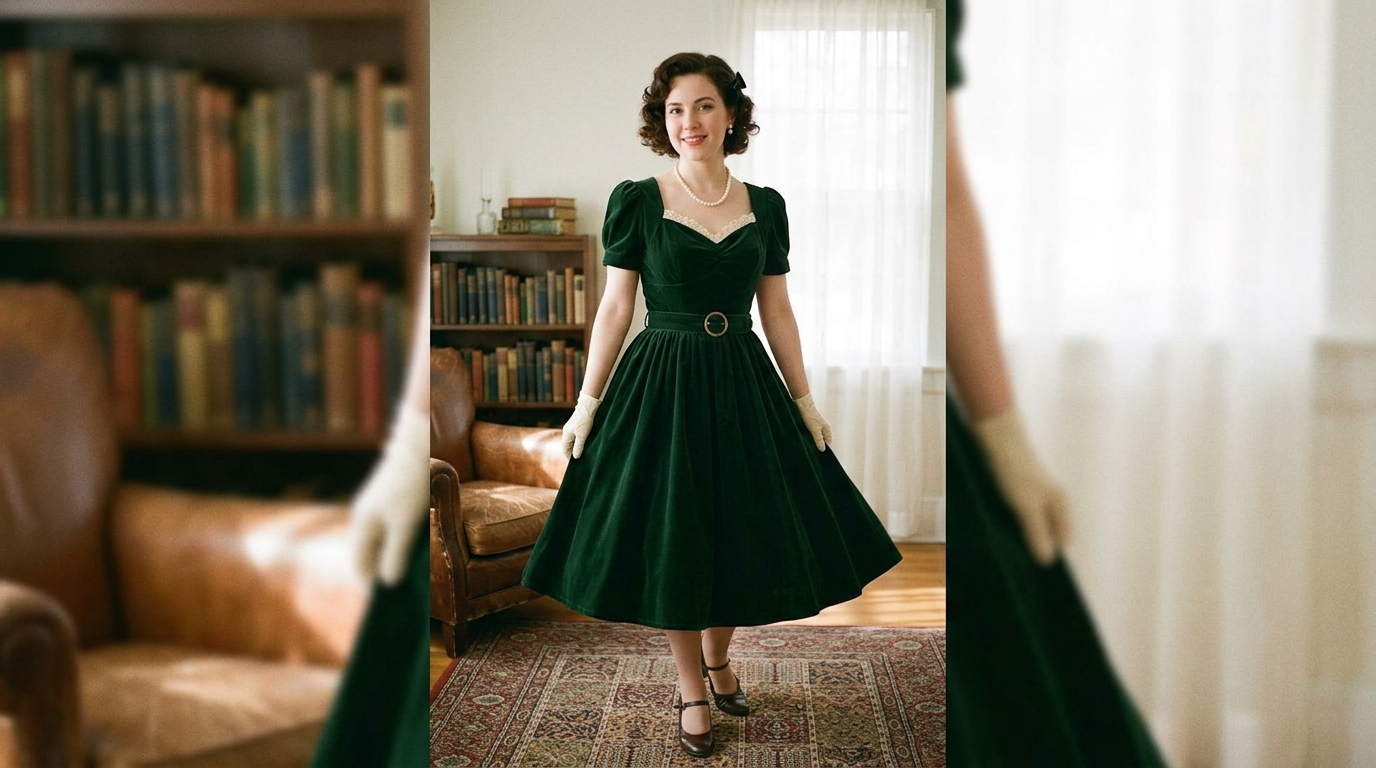
Here’s a real-world before-and-after example.
Before: a high-neck floral blouse, full midi skirt, pearl necklace, headband, kitten heels, and a structured handbag. Each item says “retro.” Together, it says “I committed to a concept.”
After: keep the blouse, swap the skirt for straight-leg jeans, remove the headband, trade the kitten heels for loafers, and use one simple bag. Now the blouse feels intentional instead of theatrical. The outfit still has vintage style, but it reads like someone with taste, not someone in costume.
That kind of restraint is also why capsule thinking helps. If you already have a tight wardrobe, you’re forced to make better decisions. A streamlined closet like The Ultimate 10-Piece Spring Capsule Wardrobe naturally pushes vintage pieces into a more wearable lane because every item has to work with the rest of your life, not just with a mood board.
Retro outfit ideas that look collected, not copied
If you want retro outfit ideas that feel believable, start with combinations people could actually wear on a normal Tuesday.
- A silky camisole, high-waisted trousers, and loafers
- A cropped cardigan, wide-leg jeans, and ballet flats
- A printed midi dress, denim jacket, and ankle boots
- A boxy blazer, plain tee, and pleated skirt
- A knit polo, straight jeans, and a vintage-inspired belt
Notice what’s missing: costume jewelry overload, matching sets of every accessory, and anything that looks like it came with a backstory.
The best vintage-inspired outfits usually have at least one boring piece. I mean that as a compliment. A plain tee. A simple belt. Clean denim. A minimal bag. Those pieces stop the look from floating away into fantasy.
And if you’re dressing for work, the bar is even higher. Office clothes already carry authority, so vintage details need to be quieter. A sharp blazer with a softly pleated skirt can look polished. A lace blouse with a neat trouser can look smart. If you need more real-life examples, Spring Office Wear Edit: 5 Looks to Copy is basically a cheat sheet for keeping personality without losing credibility.
The small mistakes that make people look dressed up instead of dressed well
A lot of “costume” problems come from tiny overcorrections.
Too many accessories.
Too perfect a match.
Too much shine.
Too literal a reference.
If the dress is already floral and feminine, you probably do not need the matching hair bow, the pearl earrings, the vintage bag, and the pointed heels. If the silhouette is strongly retro, let the rest of the outfit stay quiet. That contrast is what keeps the look alive.
Color matters too. Head-to-toe sepia tones can be beautiful, but they can also flatten the outfit into a museum display. A single modern color, even something as simple as white, black, or denim blue, can make the whole thing feel current.
And fit is non-negotiable. Vintage style clothing should skim the body, not fight it. When someone keeps tugging at sleeves, adjusting hems, or fighting with a waistband all day, the outfit stops looking elegant. It starts looking expensive and uncomfortable, which is a bad combination.
How to wear vintage style without overthinking it
If you want a practical version, use this:
-
Choose one vintage cue.
Maybe it’s a collar, a print, a silhouette, or a fabric. Not all four. -
Add one modern anchor.
Think jeans, loafers, a crisp tee, a blazer, or a clean bag. -
Remove one thing before leaving the house.
If the outfit already feels “enough,” trust that feeling. -
Check the outfit in daylight.
If it looks theatrical outside, simplify. -
Ask one blunt question.
“Would I wear this to lunch, or only to a themed event?”
That last question is the cleanest filter I know. If the answer is only a themed event, you’re probably one accessory away from costume territory.