The Dress Styles That Quietly Fix the Fit Problems Most Women Keep Blaming on Their Bodies
Why “I Look Wrong in This Dress” Is Usually a Fit Problem, Not a Body Problem
I’ve lost count of how many times I’ve heard some version of this in a fitting room: “I didn’t think I looked this wide.” Most of the time, the person didn’t change. The dress did.
That’s the part a lot of women are never really told. A mirror is not a neutral judge. Lighting flattens or exaggerates. A slightly tilted mirror can make the hem look uneven. A fabric with too much tension can pull across the stomach and turn a normal lunch into a full-body crisis. What people often call a body problem is really a communication problem between the dress and the body.
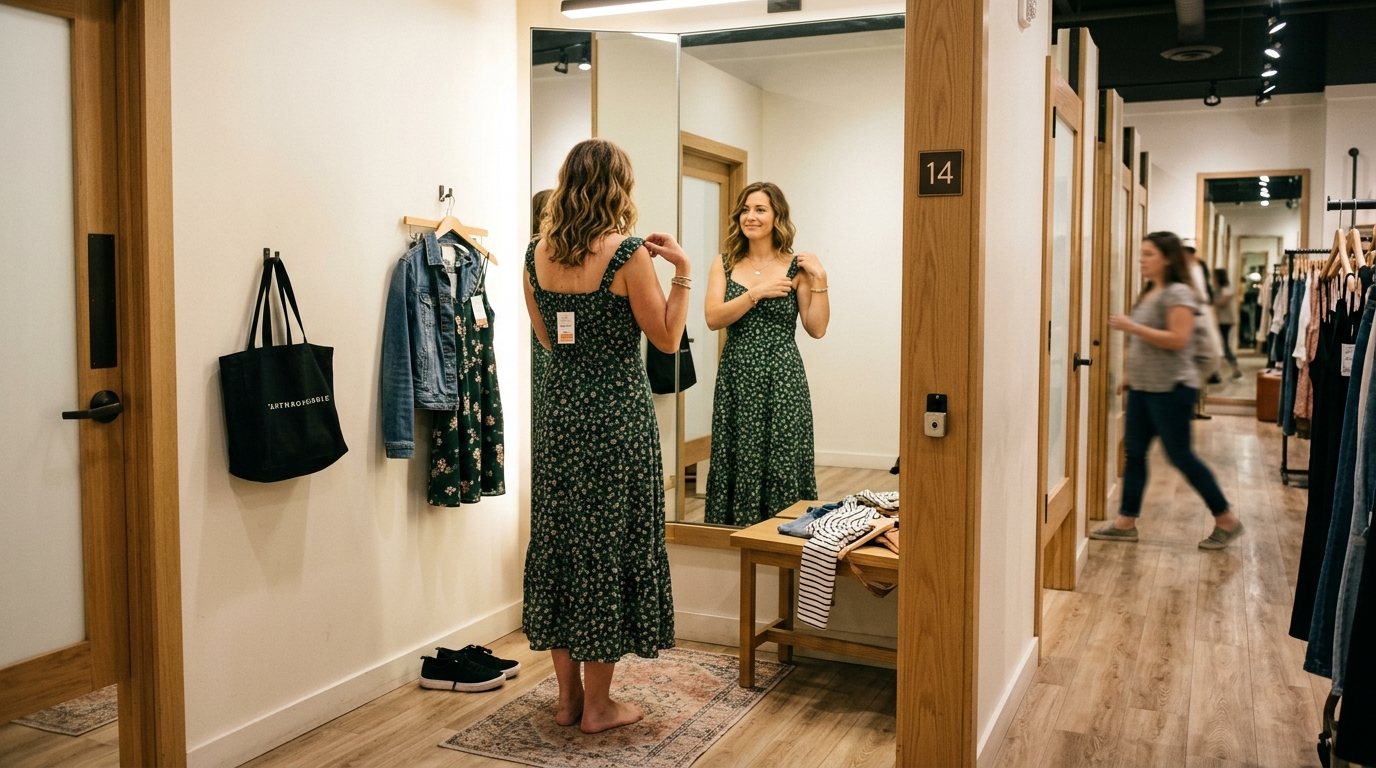
Once you start looking at dress styles that way, the whole conversation changes. You stop asking, “How do I hide my body?” and start asking, “What shape is this dress trying to create, and does it match my proportions?” That’s the real skill behind choosing dress styles for women: reading the cut, not blaming the mirror.
The fit mistake most women keep making
A lot of frustration comes from one very ordinary thing: the waist seam sits in the wrong place. I’ve seen dresses where the seam lands just one inch too high, and suddenly the torso looks shorter, the bust looks heavier, and the stomach gets visually pushed forward. Same body, completely different read.
Fabric matters just as much. A stiff cotton can hold shape but also cling in the wrong places if the cut is off. A softer rayon or viscose blend can skim the body and make the whole outfit feel calmer. I’ve watched women try on two dresses in the same size and look like two different people, just because one fabric stood away from the abdomen and the other grabbed it like Velcro.
That’s why dress style for body type is less about labels like pear or apple and more about proportion management. Torso length. Bust volume. Where the waist actually sits. How much weight the fabric has. Those details decide whether a dress feels easy or weird.
Takeaway: the body didn’t suddenly change; the dress just stopped cooperating.
The dress styles that quietly solve the most common fit problems
1. A-line dress
If you want a shape that forgives a lot without looking like it’s trying too hard, A-line is the workhorse. It fits closer at the top and opens out gently from the waist or upper waist. That means it gives room through the stomach and hips without creating a box.
This is one of the most useful dress style names to know because it solves a very specific problem: when your top half is one size and your lower half wants another. It’s also one of the easiest dress styles to hide belly, not by compressing anything, but by letting the fabric fall away from the middle.
2. Wrap dress
A good wrap dress is popular for a reason. It creates a waist without forcing one. The V-neck opens the chest, the tie lets you adjust for bust volume, and the overlap can soften the midsection.
But here’s the catch people don’t say enough: a wrap dress can gape when seated if the bust is fuller or the wrap point is too low. If you sit in the fitting room and the front keeps shifting, that’s not your fault. That’s the wrap being too shallow or the fabric being too slippery.
3. Fit-and-flare
This is the dress style for body type confusion when the goal is to look shaped, not squeezed. It defines the waist, then releases through the skirt. The result is a classic curve without requiring a tiny waist to begin with.
It works especially well when the upper body feels broader than the lower body, because it gives the eye a clear break at the waist. If you like the polished feel of Spring Office Wear Edit: 5 Looks to Copy, this is often the silhouette that makes that look believable in real life, not just in a styled photo.
4. Empire waist
Empire waist sits higher than a natural waist, usually just under the bust. That placement can be a lifesaver if your stomach is the part that gets visually amplified by standard waist seams.
It works because it changes where the eye stops. Instead of cutting the body at the widest part of the abdomen, it lifts the line upward and lets the fabric fall from there. If you’ve ever tried on a dress and thought, “Why does this make me look pregnant when I’m not?” this is often the style that fixes that exact problem.
5. Shift dress
Shift dresses are underrated because they don’t try to force a waist where there isn’t one. They skim the body with a straighter line, which can be incredibly useful when you want ease through the midsection.
The key is fabric weight. Too thin, and it clings. Too heavy, and it becomes a sack. The sweet spot is a fabric with enough structure to glide, not stick. A shift dress is often the right answer when the issue is upper-body bulk, because it doesn’t add more visual interruption across the chest and stomach.
6. Bias-cut slip dress
This one is tricky, and that’s exactly why it deserves a mention. A bias-cut slip dress can look incredible when the fabric has enough drape, but it can also expose every line if the cut is too tight or the underlayer is wrong.
I’d call this a dress style for women who want softness more than control. It follows the body instead of shaping it. If you’re choosing between a crisp neutral outfit and something more fluid, the logic behind How to Style Neutral Colors Without Looking Boring applies here too: texture and drape do the work, not loud decoration.
Takeaway: the best dress style names are really just tools for solving specific proportion problems.

How to choose the right dress without guessing
You do not need to memorize every dress style for body type on the internet. You need a quick way to test whether the dress is helping or fighting you.
1. Check the waist seam in the mirror
Stand straight, then sit down. If the seam rides up, digs in, or lands a little too high on the torso, the dress is probably creating the wrong visual break. One inch matters more than people think.
2. Look at the fabric when you bend
If the stomach area suddenly becomes the loudest thing in the room when you sit, the issue is usually tension, not size. A better fabric will move with you instead of announcing every fold.
3. Watch the shoulder and bust line
A dress can be perfect at the hips and still fail if the top is pulling. When the bust is squeezed, the eye goes straight there. That’s why some women feel “bigger” in a dress that technically fits.
4. Ask what the dress is doing to your eye line
This is the visual-perception trick most people miss. We do not see bodies in isolation. We read lines, angles, and contrast. A V-neck lengthens. A high waist lifts. A straight shift calms. A flared skirt softens the lower half. Your brain is reacting to shapes before it’s judging size.
5. Don’t trust the fitting room lighting
Retail lighting is often brutal and unflattering on purpose. It highlights tension, shadows, and texture. Try to step near natural light if you can. I’ve seen dresses go from “absolutely not” to “wait, this is actually good” just because the light stopped carving the body into pieces.
Takeaway: fit is a visual system, not a moral verdict.
What to avoid if you’re trying to make a dress feel easier
Some dress styles are not bad. They’re just honest in a way that can be unforgiving.
Very clingy jersey dresses can stick to the belly and hips if you want softness. Super rigid bodycon styles can turn every small proportion mismatch into a loud problem. And overly decorative waistlines can make the middle look busier than it is. If your instinct is to keep tugging at the fabric every five minutes, that is your body giving you useful feedback.
The same goes for dresses that are “technically your size” but still feel wrong. Size is only one piece of the puzzle. A dress can be correct on the tag and wrong on the body if the torso length is off or the bust volume is underestimated.
That’s why I always tell people to buy the silhouette that solves the problem they actually have, not the one they hope to have. If your main issue is fit around the belly, look for dress styles to hide belly through drape and placement, not through panic-buying a size up.
The quiet truth about great dress style names
The best dress styles for women are not the ones that promise to make you disappear. They’re the ones that make your body feel readable in a good way.
That’s the real shift. Once you stop treating every awkward fit as a body flaw, shopping gets less emotional and way more precise. You start noticing that a wrap dress can be powerful when the bust is supported, that an A-line can rescue a tricky hip-to-waist ratio, and that a shift dress can be the difference between “I feel stuffed in here” and “I can actually breathe.”
If you want