The reason your casual outfits still look accidental is that you’re dressing for comfort, not a style system
The real problem isn’t your basics. It’s that your basics have no job description.
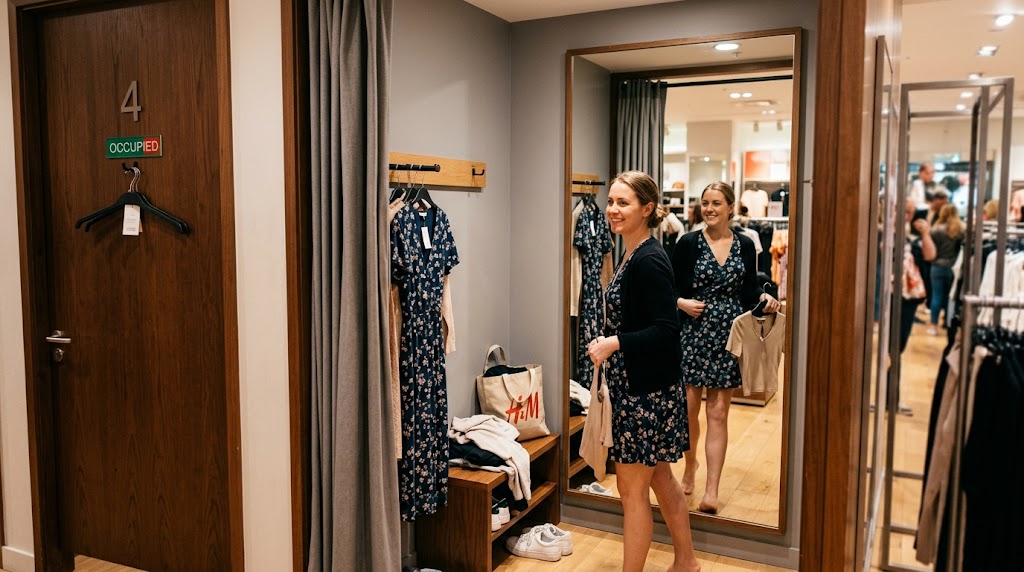
I’ve seen this happen in fitting rooms more times than I can count. A woman tries on three versions of the same outfit: straight-leg jeans, a white tee, a black blazer. On paper, all of it works. On her body, one looks too stiff, one looks too lazy, and one lands in that strange middle ground where nothing is wrong, but nothing feels intentional either.
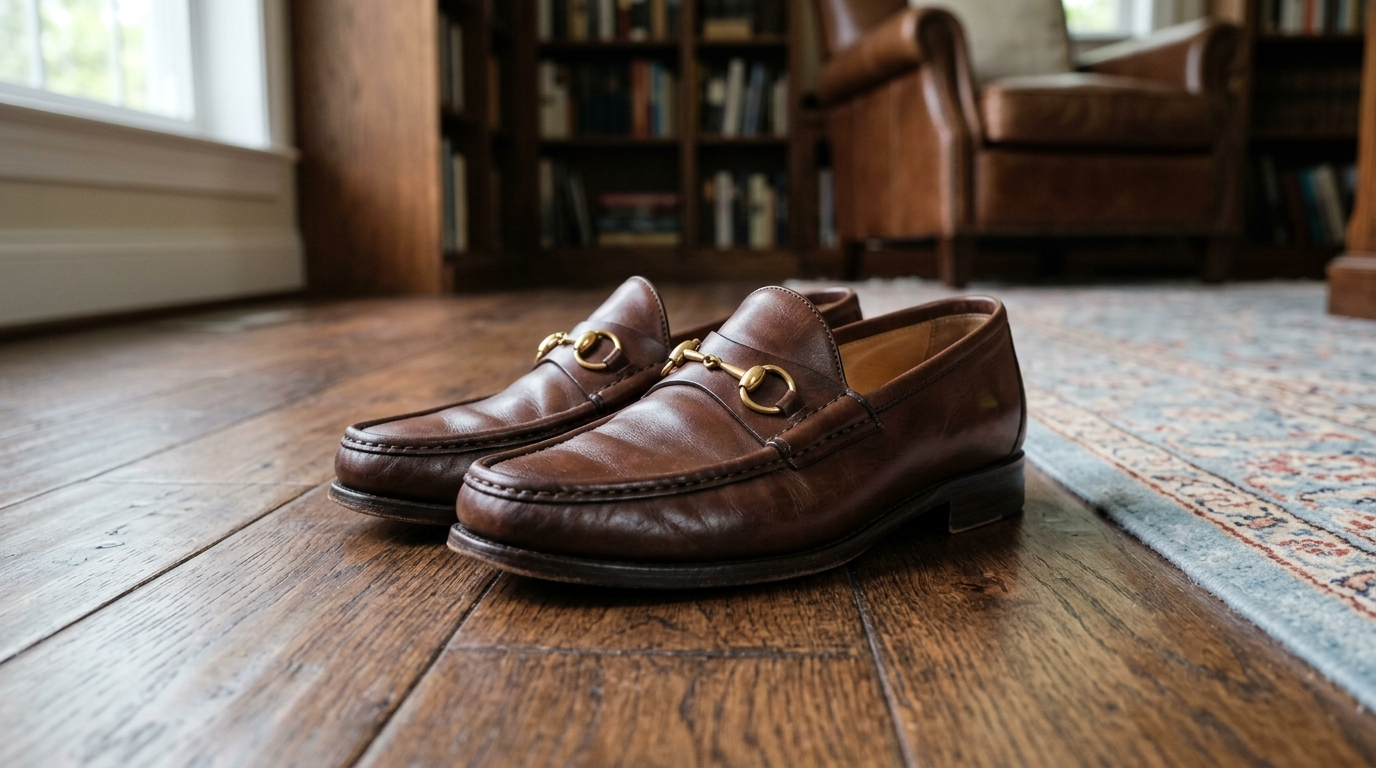
People usually blame the clothes at that point. I don’t. The shoes are often the real problem. A clean pair of loafers can make the whole outfit look edited. A chunky sneaker can make the same look feel like you got dressed in a hurry and hoped for the best.
That’s why so many casual style women keep saying, “I have good pieces, but my outfits still look accidental.” The issue is not taste. It’s structure. Casual style clothing only starts looking polished when it behaves like a system, not a pile of decent items.
Think about what your brain is doing at 8:10 a.m. Decision fatigue is real. The more choices you force yourself to make, the worse your judgment gets. That’s why a wardrobe with no pattern feels exhausting even if every piece is technically wearable. You’re not just choosing a shirt. You’re recalculating proportion, color, texture, and mood from scratch.
A style system cuts that load in half. It gives your eyes something familiar to lock onto. Same pant shape. Same neckline family. Same shoe logic. That repetition is what makes casual chic outfits look calm instead of improvised.
And no, this does not mean dressing boring. It means building a visual habit.
The system starts with three decisions you stop renegotiating
If your everyday outfit ideas keep falling apart, don’t buy more random tops. Lock in these three things and let them do the heavy lifting.
1. Pick one pant silhouette and make it your default
This is the part most people skip because pants are not glamorous. Too bad. Pants are the foundation.
Choose one shape that works on your body and repeat it until it becomes invisible in the best way. For some people that’s a mid-rise straight leg with a 28- or 29-inch inseam. For others it’s a slightly cropped wide leg that sits just above the ankle bone. The point is not variety. The point is consistency.
When the hem line stays stable, your tops and shoes stop fighting for attention. That’s when casual style clothing starts looking edited instead of random.
2. Decide what your neutral palette actually is
A lot of people say they wear neutrals, but their closet says otherwise. Beige, cream, charcoal, washed blue, and olive all behave differently. If you mix them without a plan, the outfit can look muddy.
I’d rather see one clear palette repeated across ten outfits than a closet full of “safe” colors that don’t talk to each other. If you want a cleaner read on this, How to Style Neutral Colors Without Looking Boring is basically the next step, because neutral only works when it has contrast, not when it’s just quiet.
3. Give your shoes a role, not a mood
This is where most accidental outfits are born.
A slim sneaker says one thing. A square-toe flat says another. A low-profile loafer says, “I thought about this before leaving the house.” If you keep switching shoe personalities every day, your outfits lose continuity.
I usually tell people to keep two everyday shoe lanes: one soft, one structured. Maybe white leather sneakers and black loafers. Maybe ballet flats and ankle boots. That’s enough. You do not need seven shoe identities to look stylish.
Wardrobe essentials are only useful when they repeat a shape
People love the phrase wardrobe essentials, but they often use it like a shopping list. That’s too shallow. Essentials are not about owning the “right” things. They’re about owning the same function in a few reliable forms.
A white tee can be an essential. So can a ribbed tank, a crisp button-down, or a fine-gauge knit. But if all of them fit differently, drape differently, and sit at different lengths, they are not part of one system. They are just separate purchases.
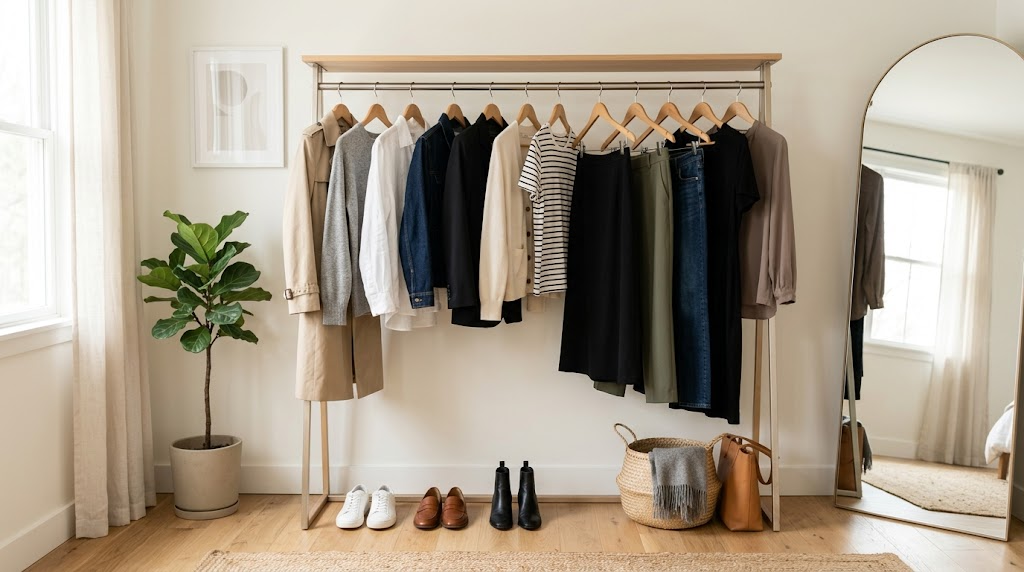
The smartest casual chic outfits usually rely on a small cast of repeat characters:
- a straight or slightly relaxed jean
- a knit top with a neckline you know flatters you
- a jacket that ends at a predictable point on the hip
- a shoe that matches your daily pace
- a bag shape that doesn’t visually fight the outfit
That last one matters more than people admit. A slouchy hobo bag changes the energy of an outfit. A structured top-handle bag makes the same jeans and tee feel more deliberate. If you like the idea of accessories doing quiet work, even something like Our Favorite Designer Bag Dupes Under 00 makes more sense when you think of the bag as a role in your system, not a flex.
A simple weekly formula beats a closet full of options
Here’s the part that actually changes mornings.
Try building a five-day rotation instead of a five-hundred-item fantasy. For example:
- Monday: straight jeans, white tee, loafers, short trench
- Tuesday: black trousers, ribbed tank, sneakers, cropped cardigan
- Wednesday: wide-leg denim, striped knit, ballet flats
- Thursday: midi skirt, tucked shirt, low-heel mules
- Friday: relaxed pants, fitted tee, blazer, clean sneakers
That’s not a prison. It’s relief.
Once you repeat a formula a few times, your brain stops treating getting dressed like a fresh problem. You start recognizing what works on sight. That’s a real cognitive shortcut. Visual consistency reduces the number of comparisons your brain has to make, which is why style systems feel calmer than “I’ll just see what happens today.”
And honestly, “what happens today” is how a lot of accidental outfits are made.
The trick is not more clothes. It’s fewer variables
This is where people get stuck. They think a better outfit requires a bigger closet. In practice, it usually needs fewer moving parts.
If your top is oversized, keep the pant cleaner. If your pant is full and fluid, keep the shoe low-profile. If your jacket is boxy, let the base layer stay simple. You’re not balancing fashion theory. You’re managing visual weight.
That’s why the best everyday outfit ideas often look boring in isolation and great in motion. They have a rhythm. The hem hits here, the sleeve stops there, the shoe opens the ankle line just enough. Those details are tiny, but they’re doing the job.
A good casual style women formula doesn’t shout. It repeats.
What to stop doing if your outfits still feel accidental
A few habits quietly wreck the whole system:
- buying “one-off” pieces that don’t match your usual pant shape
- mixing three different levels of polish in one outfit
- treating shoes as an afterthought
- changing color palettes every week
- keeping clothes that only work with one very specific item
That last one is brutal, but useful. If a top only works with one skirt and one pair of shoes, it is not an essential. It is a hostage situation.
The fix is not perfection. It’s coherence.
The real upgrade is getting dressed without negotiating with yourself
The best casual chic outfits do something psychological before they do anything visual. They remove doubt. You get dressed, look in the mirror, and don’t have to hold a committee meeting with yourself.
That’s the real payoff of a style system. Not looking “put together” for strangers. Not chasing some impossible version of effortless. Just having a wardrobe that knows its own job.
If your closet can let you get dressed in four minutes without arguing with yourself, you’re not just comfortable. You’re finally in control.