The Plus Size Style Rules Everyone Keeps Repeating Are Outdated—Here’s What Actually Makes Outfits Look Modern
The Rule I Kept Hearing Was Wrong: Plus Size Style Is Not About Hiding
For years, the loudest message in plus size fashion tips was basically this: cover more, cling less, darken everything, and keep the eye moving away from your body. That advice sounds safe. It also makes a lot of people look like they got dressed in a hurry for a job they didn’t want.
What I wish more people said out loud is simpler: modern outfits are not built by concealment. They’re built by editing visual noise. When the shape is clear, the fabric behaves well, and the proportions feel intentional, the whole look reads current. That’s true in plus size fashion for women just as much as it is in any other size range.
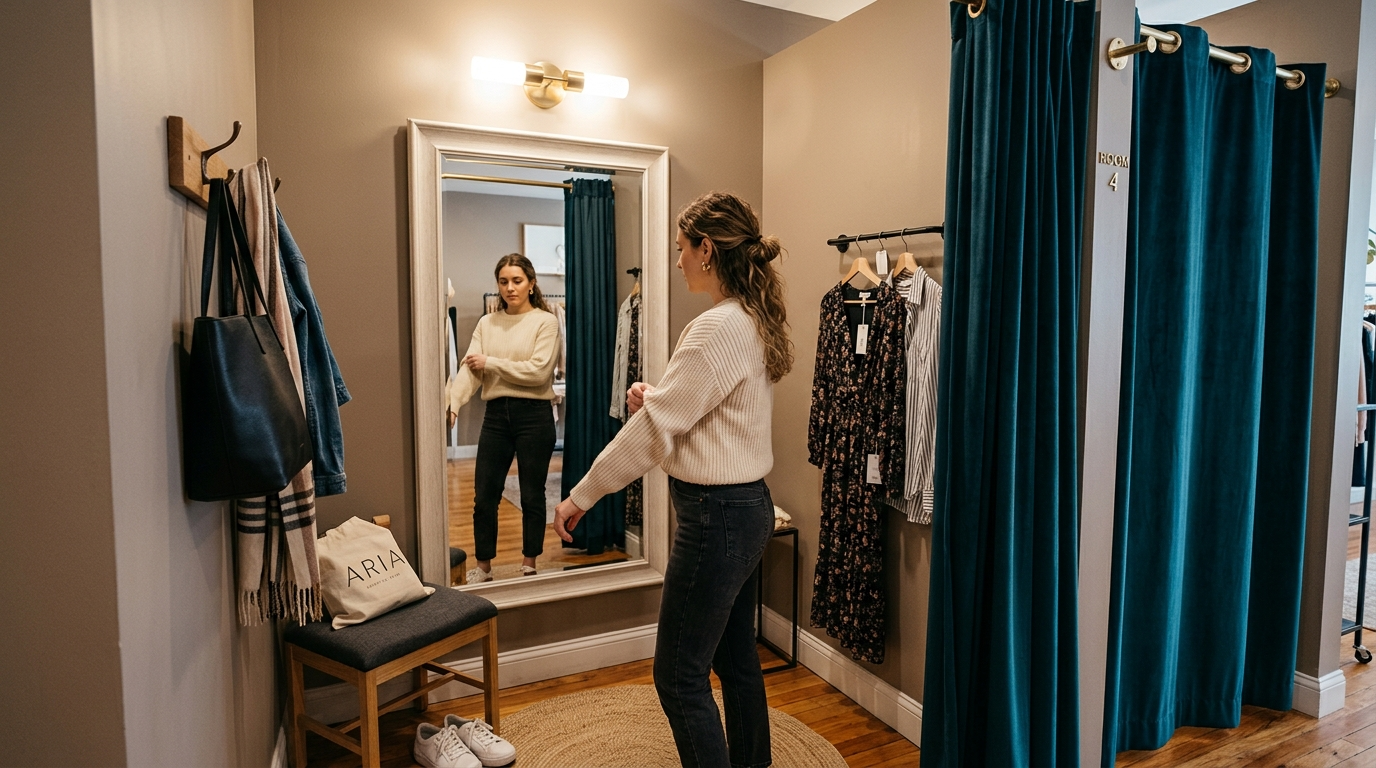
I keep seeing the same thing in fitting rooms: someone pulls on a top, tugs the hem down, asks, “Does this make me look too big?” and the real problem is not size at all. It’s that the outfit has too many competing ideas. Too much drape, too many ruffles, too many layers, too much trying. Modernity is quieter than that.
The old rules are usually trying to solve the wrong problem
A lot of outdated plus size fashion trends were built around fear. Fear of clinging. Fear of showing arms. Fear of waistbands. Fear of looking “too much.” So the styling advice turned into a long list of corrections.
But correction is not the same thing as style.
If you want clothes to look modern in 2026, the question is not “How do I disappear?” It’s “What is the cleanest version of this outfit?” That usually means a clearer line at the shoulder, a more deliberate hem length, and one fabric that knows what job it’s doing.
A few examples make this obvious:
- A boxy tee in a midweight cotton, ending right at the high hip, looks sharper than a stretchy top that clings at the stomach and pools at the back.
- A midi skirt with a straight or slightly A-line cut feels more current than one with extra tiers, extra gathers, and extra shine all at once.
- A blazer that skims the body and stops around mid-hip usually reads more modern than one that is either too oversized to define anything or too fitted to move.
That’s why so many plus size fashion for women outfits feel stuck even when the pieces are expensive. The problem is not the budget. It’s the editing.
What modern actually looks like on a body
If I had to reduce the whole thing to one sentence, it would be this: modern plus size style is about proportion, line, and texture doing less fighting with each other.
That sounds abstract until you see it in clothes.
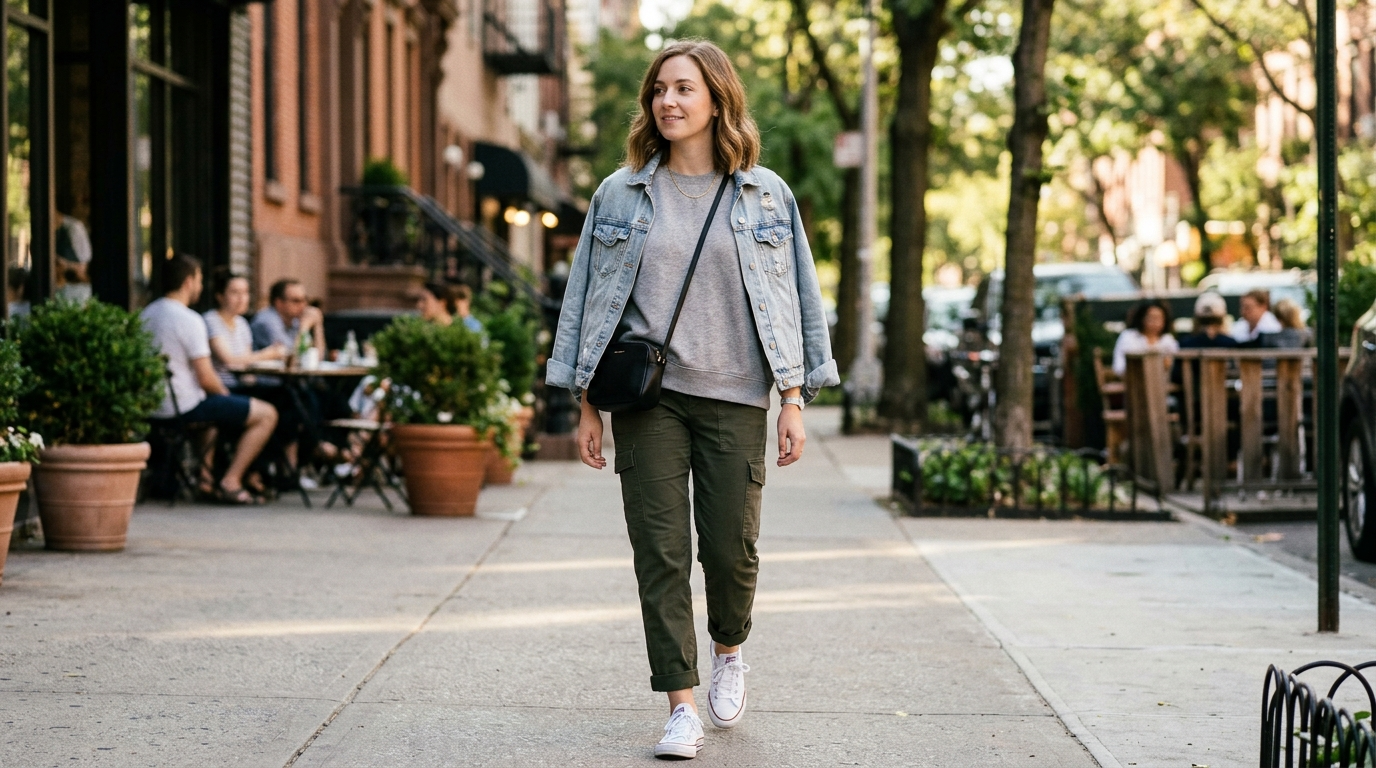
A casual outfit I keep coming back to is simple: straight-leg jeans with a 29 to 31 inch inseam, a crisp white ribbed tank that ends near the waistband, and an unbuttoned overshirt in a washed cotton poplin. Nothing is squeezing. Nothing is swallowing the body. The jeans make a vertical line, the tank gives structure, and the overshirt adds movement without turning into a tent. That is one of those plus size fashion tips that sounds boring until you wear it and realize you look awake.
Now compare that with the outfit so many people get pushed toward: a long tunic, leggings, a long cardigan, and a necklace trying to create interest where the outfit has none. It may feel “safe,” but it often reads heavier because the eye has nowhere to land.
If you want a shortcut, use this test: can you tell where the outfit starts and stops? If the answer is no, the look probably needs editing.
The fitting-room test I trust more than style rules
A few weeks ago I watched a woman in a store try on two dresses that were almost the same price, almost the same color, and totally different in effect.
The first was a soft jersey midi with a gathered waist and a lot of fabric through the skirt. On the hanger it looked forgiving. On her body it folded in on itself. The waist seam sat slightly too low, the fabric stuck at the midsection, and every time she turned, the skirt pulled sideways. She looked at herself and said, “It’s comfortable, but it feels kind of… much.”
The second dress was a matte knit column with a square neckline and a back slit. Same general size range, very different energy. It followed the body without squeezing it. The neckline opened the upper body. The slit let her walk without the hem fighting her knees. She looked up and laughed: “Oh. This one actually moves.”
That sentence is the whole argument.
Modern clothes move well. They don’t just sit there and hope for the best. In plus size fashion 2026, the pieces that feel current are usually the ones that understand the body as something dynamic, not something to be managed.
Three outfit formulas that look modern without trying too hard
1. Casual: straight denim, fitted knit, clean layer
This is the easiest place to start if you want plus size fashion trends that don’t age fast.
Try:
- straight or relaxed straight jeans
- a fitted knit tee or tank
- one overshirt, denim jacket, or cropped utility layer
The key is balance. If the bottom is relaxed, keep the top tidy. If the top has volume, keep the bottom cleaner. That’s why a lot of people do well with pieces from a The Ultimate 10-Piece Spring Capsule Wardrobe mindset: fewer items, better combinations, less visual clutter.
2. Office: sharp shoulder, fluid trouser, low-noise palette
This is where modernity becomes obvious fast.
A good office look might be:
- a blazer with a soft shoulder and a slight taper
- wide-leg trousers that skim, not balloon
- a shell or knit top in a matte fabric
- loafers or pointed flats
I saw this exact formula on a woman leaving a meeting downtown: charcoal blazer, cream trouser, black square-toe flats, hair pulled back, tote bag tucked under one arm. Nothing flashy. But the outfit held its shape while she walked. The trouser crease stayed visible. The blazer didn’t collapse. That’s the kind of detail that makes an outfit look expensive even when it isn’t.
If you’re building workwear, Spring Office Wear Edit: 5 Looks to Copy is useful less as inspiration and more as a reminder that office clothes look best when they stop over-explaining themselves.
3. Evening or weekend: one strong line, one clean texture
For dinner, drinks, or a weekend event, don’t pile on “special” details just because the occasion feels special.
A modern option:
- a slip skirt or tailored midi
- a structured tank or one-shoulder top
- a compact bag
- one polished shoe
This is also where neutral dressing can look extremely current if the silhouette is doing the work. A black skirt, ivory top, and tan sandal can feel flat or very chic depending on cut and fabric. If you want to go deeper on that balance, How to Style Neutral Colors Without Looking Boring is basically a lesson in letting shape carry the outfit when color steps back.

The fabrics matter more than people admit
This is where a lot of plus size fashion for women advice gets too vague, so let me be specific.
Fabric changes the whole read of an outfit.
- Matte cotton poplin usually looks cleaner than shiny synthetic blends because it holds a line.
- Heavy jersey can be great when it skims, but it turns messy when it stretches out too fast.
- Linen looks fresh, but only if the cut is intentional enough to handle the wrinkling.
- Rib knits are useful because they create texture without adding bulk.
- Satin can look elegant, but if the cut is too soft and the fabric too thin, it can start looking more costume than modern.
This is why some outfits look good for exactly 12 minutes and then fall apart in real life. The fabric was never on your side.
The real shift: less decoration, more decision
I think a lot of people still reach for old plus size fashion tips because they’ve been taught that more effort equals more safety. More coverage. More shaping. More rules. More layers. More fixing.
But the modern look usually comes from the opposite instinct. Fewer competing details. Cleaner proportions. Better fabric. A little more confidence in the body you already have.
That’s the part that feels like a style awakening, not just a wardrobe update. You stop asking, “What should I hide?” and start asking, “What can I remove so the outfit has a stronger line?”
That shift changes everything.
And honestly, it’s the difference between wearing clothes that merely fit and wearing clothes that look like they belong in 2026.