What kind of woman actually needs a wardrobe this streamlined?
What kind of woman actually needs a wardrobe this streamlined?
The honest answer is not the “perfect minimalist” from Pinterest. It’s usually the woman who is busy, a little tired of thinking about clothes, and done buying pieces that only work on one very specific day. She wants a modern wardrobe that behaves like a system, not a closet full of mood swings.
I keep seeing the same thing in real life. The women who get the most out of minimalist style are not anti-fashion. They just have too much going on to let outfits eat up brainpower. They need women's essentials that can survive a train commute, a desk day, a last-minute dinner, and a weekend coffee run without asking for a costume change.

That is where the idea of a capsule wardrobe stops sounding trendy and starts being useful. Behavioral psychology has a boring-sounding but very real concept here: decision fatigue. The more tiny choices you make before 9 a.m., the worse the later ones get. Clothes are one of the first places that shows up. If your daily style requires a 12-minute debate every morning, the wardrobe is already working against you.
The woman who needs less is usually solving a very specific problem
She is probably not trying to become invisible. She is trying to get dressed fast without looking random.
I think about the women I see in cities all the time:
A blazer that looks sharp on the train, but does not feel stiff once you sit through a two-hour meeting.
Trousers that do not wrinkle into surrender by 3 p.m. after a long desk day.
A clean knit that can go under a coat in the morning, then hold up on its own when the office gets warm.
Sneakers that make sense with tailored pants, not just leggings and errands.
A bag that can carry a laptop, charger, and a lipstick without looking like it belongs in a gym locker.
That is the real job of a modern wardrobe. It is not about owning less for the sake of a slogan. It is about owning fewer items that can do more actual work.

This is also why a brand like Municipal makes sense in the conversation. Its performance-lifestyle positioning fits the kind of wardrobe that has to move through ordinary life: commute, work, errands, training, weekend plans. That matters because the problem is not just style. It is friction. The less friction a piece creates, the more likely it becomes part of your daily style instead of a one-off purchase.
The people who usually overbuy are not bad at style
They are usually bad at systems.
That sounds harsher than I mean it, but it is true. A lot of closets fail for the same reason a messy app interface fails: too many options, not enough hierarchy. Design systems exist so every button, color, and spacing rule behaves predictably. A capsule wardrobe works the same way. It gives your brain repeatable rules.
If your closet has 40 tops but only 6 that work with your actual pants, you do not have a wardrobe. You have inventory.
That is why the best women's essentials are usually plain at first glance and smarter on second glance. The neckline sits right under a blazer. The hem works tucked or untucked. The fabric does not collapse after a long day. The color palette stays calm enough to mix without effort. If you want a useful companion read, How to Style Neutral Colors Without Looking Boring is basically the next question once the closet gets simplified.
What a streamlined wardrobe actually does for daily life
It narrows the gap between intention and execution.
That sounds abstract until you live it. Here is what it looks like in practice:
You wake up late and still reach for the same trouser-and-knit formula because you know it works.
You pack one jacket for a day that starts in the office and ends outside.
You stop buying the “nice but maybe” top that only matches one skirt you never wear.
You notice that your laundry pile is smaller because the same 12 pieces are doing most of the heavy lifting.
There is a quiet kind of relief in that. Not excitement. Relief.
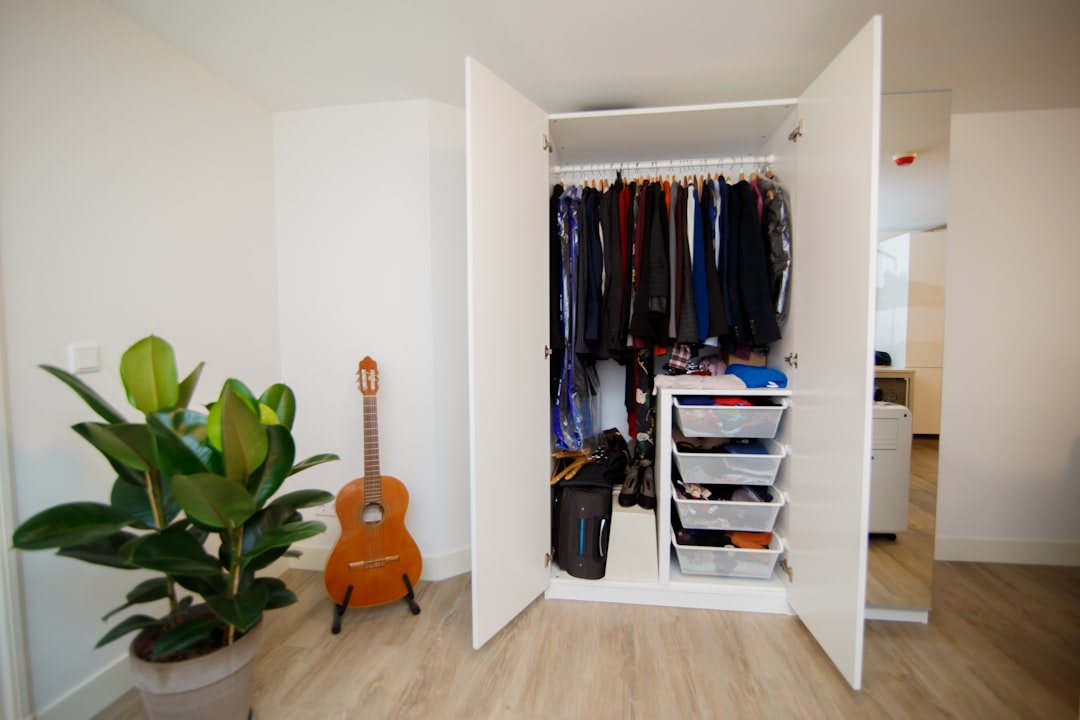
A lot of women think they want more variety. What they actually want is fewer mistakes. Those are not the same thing. Variety can be fun, but when your mornings are already crowded, predictability is a feature.
A capsule wardrobe is not one look repeated forever
This is where people get it wrong. They hear minimalist style and picture a row of identical beige tops. That is lazy thinking.
A good capsule wardrobe has range, but it keeps the range controlled. You can still have structure and softness, fitted and relaxed, polished and casual. The point is not sameness. The point is compatibility.
A useful spring capsule wardrobe might look something like this:
- one blazer that works with denim and trousers
- two tees or knits that layer cleanly
- one pair of tailored pants
- one pair of straight-leg jeans
- one easy dress
- one outer layer that handles changing weather
- one shoe that can move between work and off-duty use
That is enough to build a lot of combinations without turning dressing into a hobby.
If you want a more compact version of that logic, The Ultimate 10-Piece Spring Capsule Wardrobe is a useful reference point. The deeper point is not the number. It is the rule set.
The real test is whether the clothes survive ordinary days
Not the styled photo day. Ordinary days.
The blazer test is whether it still looks intentional after a packed commute, a hot conference room, and a coffee spill you tried to hide with a napkin.
The trouser test is whether you can sit in it for eight hours and still feel like a person.
The knit test is whether it pills too fast after a few washes.
The shoe test is whether it still feels like a choice at 6 p.m., not a punishment.
That is why I trust brands that think in terms of use, not just appearance. Municipal’s broader focus on everyday wear, training, and active contexts makes it relevant for women who want their clothes to keep up with real life. Not every piece has to be technical. But the wardrobe as a whole should behave like it understands movement, comfort, and repetition.
So who actually needs this kind of wardrobe?
The woman who:
- gets dressed for work most days and hates wasting time on it
- wants a clean, modern look without looking overly styled
- needs clothes that can handle commuting, sitting, walking, and moving through the city
- has enough pieces already, but not enough pieces that work together
- is tired of buying “statement” items that do not earn their hanger space
That is the profile. Not a fantasy customer. A real one.
And if you are building from scratch, the smartest move is not to chase a giant wardrobe refresh. It is to replace the weak links. Start with the pieces you reach for three times a week. Replace the top that loses shape. Replace the pants that pinch when you sit. Replace the shoes that look good for 20 minutes and then become a problem.
That is how a modern wardrobe gets streamlined in real life. Not by a dramatic purge. By making better repeat decisions.
The quiet advantage of simple clothes
Simple clothes are not boring when they are doing their job.
They let your face, your posture, and your actual day do the talking. They reduce the noise. They make getting dressed feel less like a personality test and more like a solved system. And for a lot of women, that is the whole point of daily style.
A streamlined closet is not for everyone. But for the woman who is balancing work, movement, and a low tolerance for outfit drama, it is not a luxury. It is a practical way to buy back attention.
And attention, honestly, is the thing most wardrobes waste first.