Why Your Outfit Style Keeps Changing — and the Women Who Look Most Put Together Usually Have One Thing You Don’t
Why Your Outfit Style Keeps Changing
If your outfit style seems to change every few months, you’re not broken. You’re probably responding to your life.
A new job. A different commute. A breakup. A body change. A new city. Even one small shift, like suddenly needing to look polished on Zoom at 8:30 a.m., can make your closet feel like it belongs to somebody else. That’s why so many women open their wardrobe and think, “I have clothes, but nothing feels like me.”
The women who look most put together usually aren’t the ones buying the most. They’re the ones who built a system that can survive real life.
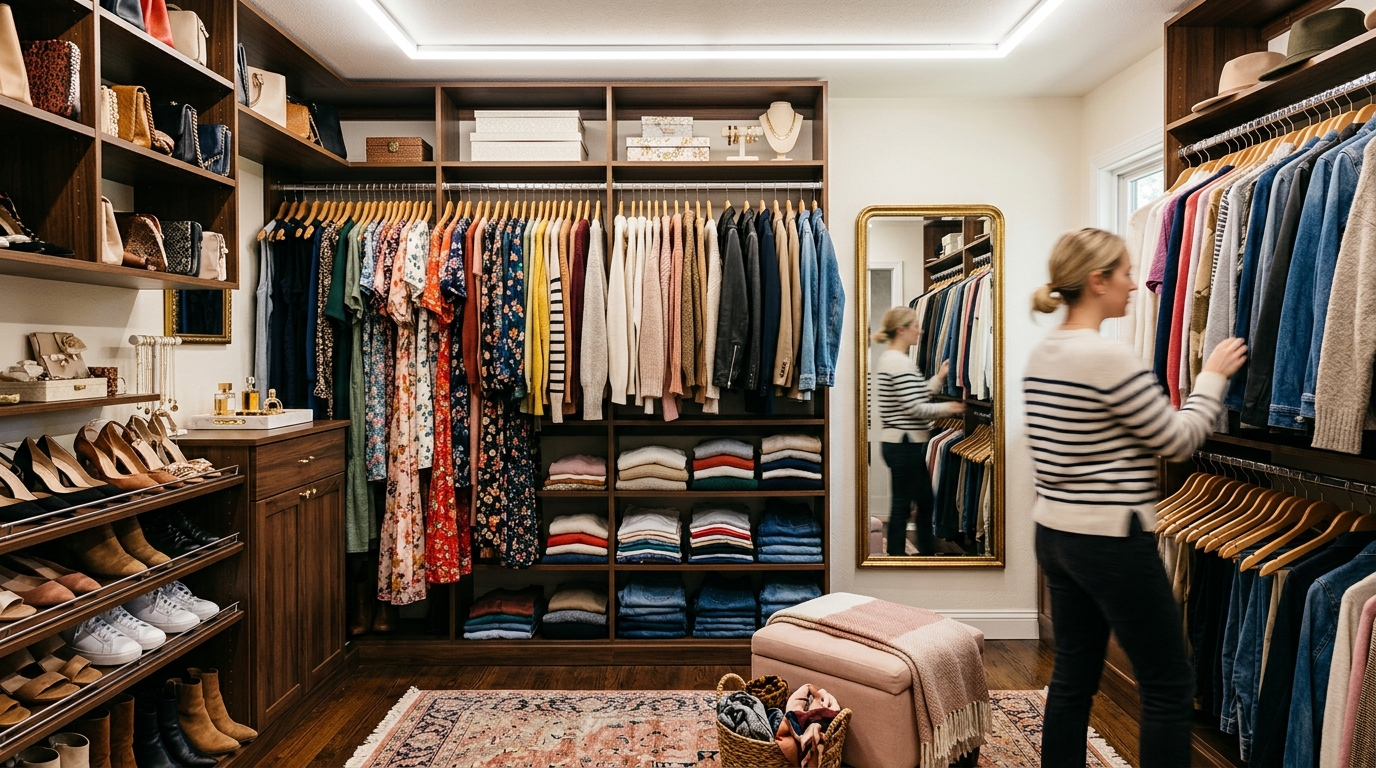
I’ve seen this happen on a random Tuesday morning more times than I can count. You’re half-awake, coffee in one hand, staring at a blazer that looked sharp in the store and somehow now feels stiff and wrong. The jeans that used to be your safe choice sit there a little too low. The “nice” top wrinkles if you breathe near it. Then you end up in the same black pants, white tee, and one necklace you can put on without thinking.
That is not a taste problem. That’s a decision problem.
Style Drift Usually Starts in the Closet, Not in Your Head
People like to talk about outfit styles for women as if style is a personality trait you either have or don’t. I don’t buy that. In real life, style changes because your closet keeps sending mixed signals.
You buy one romantic blouse because you’re in a softer mood. Then a sharp blazer because you want to look powerful. Then wide-leg trousers because they’re “very now.” Then sneakers because your feet are tired of pretending. None of those pieces are wrong. The problem is that they don’t agree with each other.
That’s how outfit style starts drifting. Not dramatically. Quietly.
One day your wardrobe is giving clean minimalism. A month later it’s preppy. Then it’s office-core. Then it’s “I guess I’m into vintage now?” The clothes are not evolving into a style. They’re just reflecting whatever caught your eye at the moment.
This is where a fashion style guide helps, but not in the Pinterest-board way. The useful version is less about labels and more about pattern recognition. Which shapes make you feel like yourself? Which fabrics survive your actual routine? Which colors do you keep reaching for when you’re tired, rushed, or slightly annoyed?
That’s the hidden work. Not inspiration. Repetition.
The Real Advantage Is Not More Clothes. It’s Less Mental Noise.
Here’s the part people miss when they talk about capsule wardrobe ideas. A good wardrobe doesn’t just save space. It reduces cognitive load.
That sounds technical, but the experience is simple: fewer decisions, fewer bad guesses.
Psychologists talk about decision fatigue, and you can feel it in your closet before you can name it. If every morning requires a fresh negotiation between “what looks good,” “what feels comfortable,” and “what fits the weather,” you burn through energy before the day starts. A coherent closet cuts down that mental friction. It lowers decision entropy, which is just a fancy way of saying your options stop feeling chaotic.
That’s why some women look polished in everyday life, not just in photos. Their clothes work together without a committee meeting.
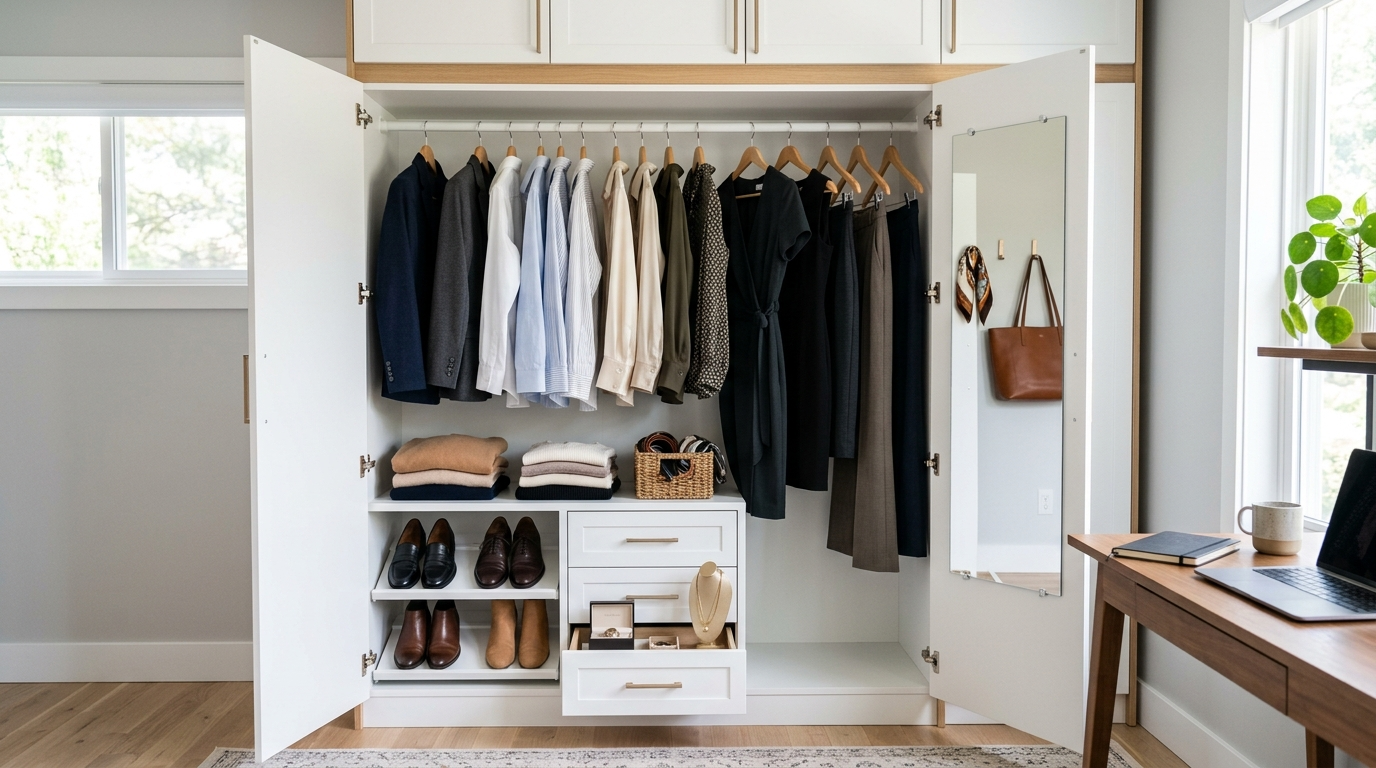
I noticed this most clearly after I cleaned out a closet that had become a graveyard of almost-right pieces. A cropped blazer with sleeves I kept rolling up. Two nearly identical gray sweaters, one itchy, one fine. Three pairs of black trousers, each with a different flaw. I wasn’t missing clothes. I was missing consistency.
The fix was boring, and that’s why it worked. I kept the pieces I actually wore on repeat, then built around them with a tighter set of rules: one pant shape, two jacket silhouettes, a color family I could repeat without thinking. My mornings got faster, but more importantly, my outfits stopped arguing with each other.
What Put-Together Women Usually Have That You Don’t
It’s not a bigger budget. It’s not a secret body type. It’s a clearer filter.
They know what they’re trying to say before they shop.
That’s the difference between collecting outfit styles for women and building one that lasts. A polished woman can walk into a room in jeans, loafers, and a sweater and still look intentional because the proportions, texture, and color story are doing the same job. Nothing is shouting over the rest of the outfit.
If you want a practical example, look at a strong capsule wardrobe. The point is not deprivation. It’s compatibility. The pieces can mix on tired mornings, on “I have a meeting in 20 minutes” mornings, and on the kind of mornings where you need to look awake before you are awake.
If you want a cleaner starting point, The Ultimate 10-Piece Spring Capsule Wardrobe is useful because it shows how a small set of pieces can do real work without turning your closet into a uniform.
A Better Way to Think About Style
The mistake is treating style like self-expression only. It is also habit design.
Habits are powerful because they remove repeated choices. Wardrobes work the same way. If your best pieces share a color family, a fit logic, and a level of formality, getting dressed becomes almost automatic. You don’t need to reinvent yourself every season. You need a structure that can absorb change.
That’s why style instability often shows up during transitions. New city, new office, new body, new social circle. Your old outfit style no longer matches the life you’re living, but your closet hasn’t caught up yet.
This is where people start buying random “refresh” pieces and wonder why nothing feels right. The answer is usually not another trend. It’s a tighter system.
A few everyday outfit ideas make that obvious:
- Straight-leg trousers, fitted tee, structured jacket
- Mid-wash jeans, knit top, loafers
- Slip skirt, simple sweater, clean sneakers
- Black pants, crisp button-down, low heel
None of these are exciting on paper. That’s the point. They work because they repeat well.
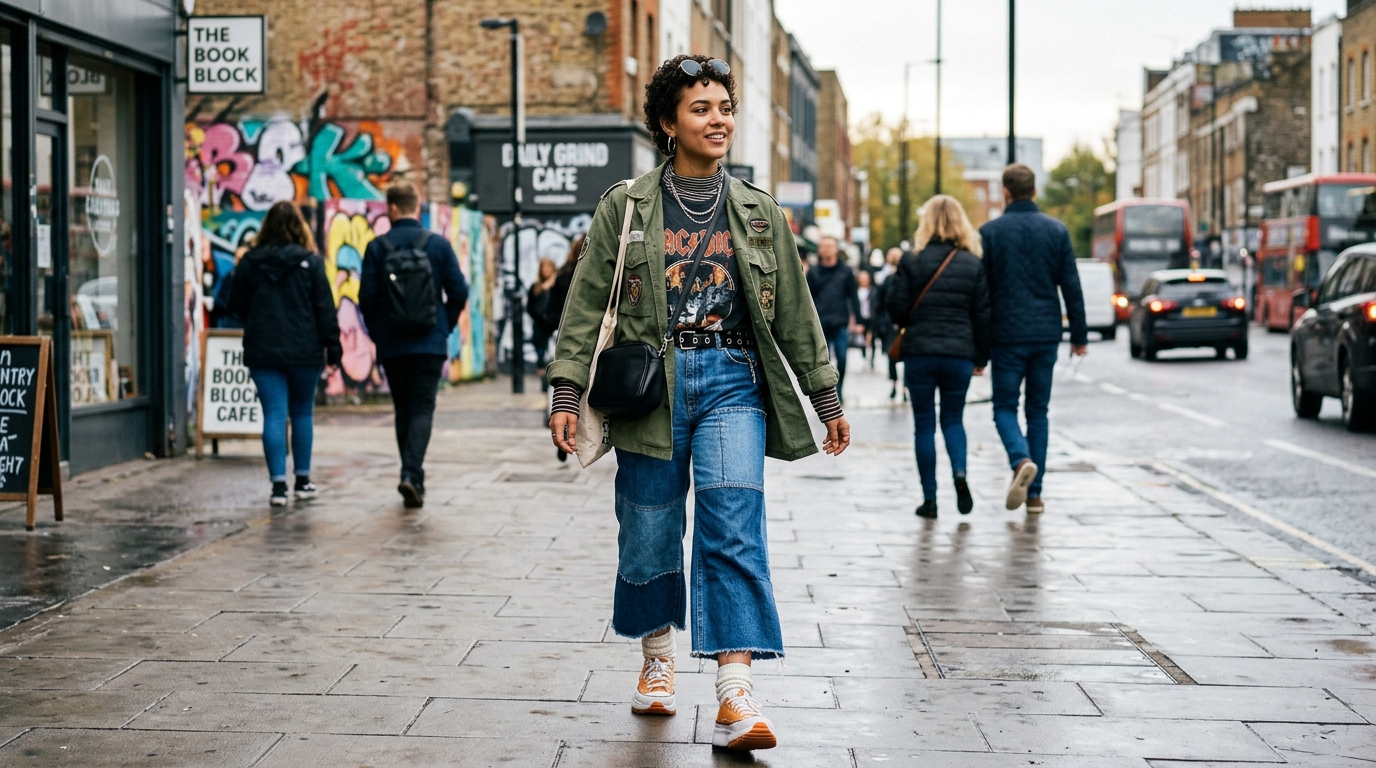
If your closet is full of statement pieces but weak on repeatable basics, you’ll keep feeling like you need a new personality every month. If you want help making neutrals feel alive instead of flat, How to Style Neutral Colors Without Looking Boring is a smart next click because the real trick is contrast, not volume.
A Simple Reset When Your Style Feels Off
You do not need a full wardrobe overhaul to stop the drift.
Try this:
- Pull out the 10 things you wear most.
- Notice what they have in common.
- Write down the colors, cuts, and fabrics that repeat.
- Separate the pieces that look good alone from the pieces that work with other clothes.
- Stop buying anything that cannot fit your pattern.
The common mistake is shopping for the version of yourself you wish would appear on a random Thursday. The better move is dressing the life you actually have.
If you work in an office, your style system may need more structure. If that’s where you’re stuck, Spring Office Wear Edit: 5 Looks to Copy is worth a look because it translates that idea into outfits you can wear without overthinking them.
The Quiet Truth
The women who look most put together are not always the most stylish in the dramatic sense. They’re the most coherent.
Their clothes make sense from one outfit to the next. Their closet is not a museum of impulses. It’s a working system. That’s why their outfit style seems steady while everyone else’s keeps wobbling.
So if your style keeps changing, don’t rush to blame your taste. Check your structure.
A good wardrobe doesn’t make you less yourself. It makes it easier to find yourself on a Tuesday morning, when the coffee is cold, the blazer feels wrong, and you need an outfit that can keep up.